Miglena DIKOVA-MILANOVA

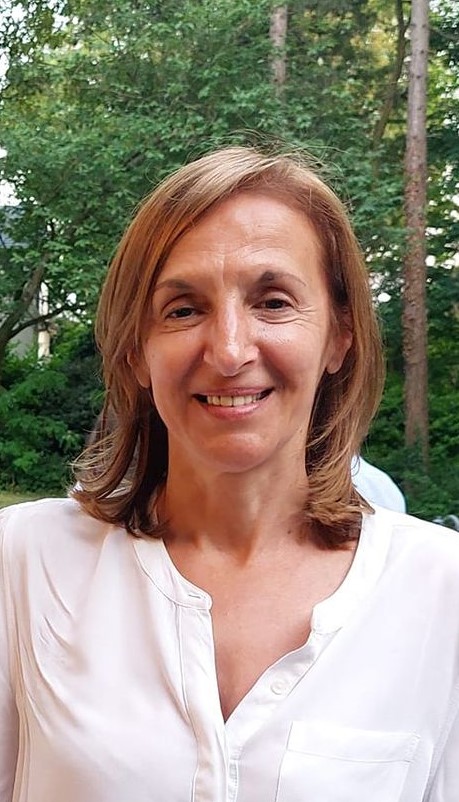
Miglena Dikova-Milanova is a lecturer of Bulgarian language and culture at the Department of Languages and Cultures at Ghent University.

She holds a PhD in Philosophy from KU Leuven, 2008. Her research interests and publications include Russian and Bulgarian classic and contemporary literature, in particular M. Bulgakov, L. Tolstoy, A. Popov and G. Gospodinov, literary history and criticism, philosophy of culture and aesthetics.

Miglena Dikova-Milanova is the author of two poetry books, "Будна вода" (“Wake water”,1992) and “4(four)2(two)на” (2021).
  • Network to Promote Linguistic Diversity
  • Camões Instituto de Cooperação e Língua Portugal
  • Danish Cultural Institute
  • Ambassade du Luxembourg à Bruxelles
  • Permanent Representation of the Republic of Slovenia to the European Union
  • Ville de Bruxelles
  • It Skriuwersboun
  • Embassy of the Republic of Estonia in Belgium
  • Leeuwarden Europan Capital of Culture 2018
  • Spain Arts and Culture - Cultural and Scientific Service of the Embassy of Spain in Belgium
  • Etxepare Euskal Institutua
  • Greenlandic Writers Association
  • Embassy of Sweden
  • Scottish Government EU Office
  • Istituto Italiano di Cultura
  • MuntPunt
  • Embassy of Ireland
  • Austrian Presidency of the Council of the European Union
  • Permanent Representation of the Republic of Estonia to the European Union
  • Swedish Institute
  • Embassy of the Republic of Latvia to the Kingdom of Belgium
  • Polish Institute - Cultural Service of the Embassy of the Republic of Poland in Brussels
  • Lithuanian Culture Institute
  • LOFT 58
  • Greenland Representation to the European Union
  • Orfeu - Livraria Portuguesa
  • Commission européenne
  • Mission of the Faroes to the EU
  • Embassy of Andorra
  • Romanian Cultural Institute in Brussels
  • Austrian Cultural Forum
  • LUCA School of Arts
  • Czech Centre Brussels
  • Vlaams-Nederlands Huis deBuren
  • Yunus Emre Institute
  • Instituto Cervantes Brussels
  • Permanent Representation of Lithuania to the EU
  • Hungarian Cultural Institute Brussels